Missed call text back for small businesses: what to say and how it works
You know the situation well: a tradesperson is on a job with their hands full, an appointment-based business is actively dealing with a customer in the chair, or a small team is already handling another call. The phone rings, but nobody is available to answer it in time.
A missed call doesn't automatically mean a lost customer. However, the reality of modern consumer behaviour is that if they don't hear back quickly, they will likely just move down the search results and call the next business on their list. That is exactly where missed call text back comes into play, serving as a vital safety net for your local business.
It is a frustrating cycle. You spend money on marketing and local SEO to make the phone ring, only to lose the lead because you were busy doing the actual work that pays the bills. Implementing an automatic text after a missed call is one of the simplest yet most effective ways to bridge this gap, ensuring that every enquiry is acknowledged instantly.
What is missed call text back?
Missed call text back is a straightforward, highly effective piece of missed-call automation that responds to callers precisely when you can't. It acts as an immediate first line of response, keeping the caller engaged rather than letting them wander off to a competitor.
Here is exactly how the process works in practice:
- A customer calls your business number.
- The call goes unanswered, either ringing out or going to voicemail.
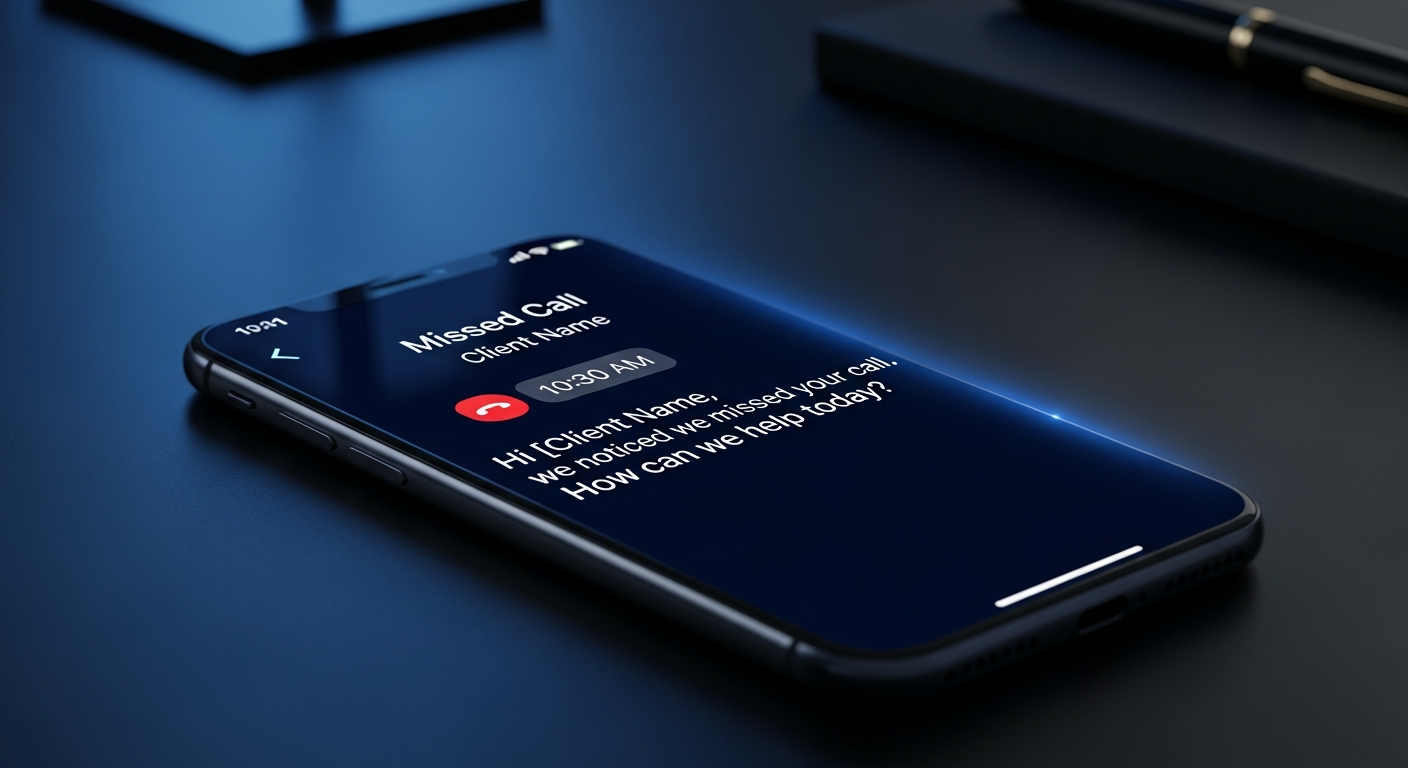
- The system instantly recognises the missed call and sends an immediate, pre-approved text message directly to the caller's mobile phone.
- The caller reads the message and can reply by text with their specific enquiry or question.
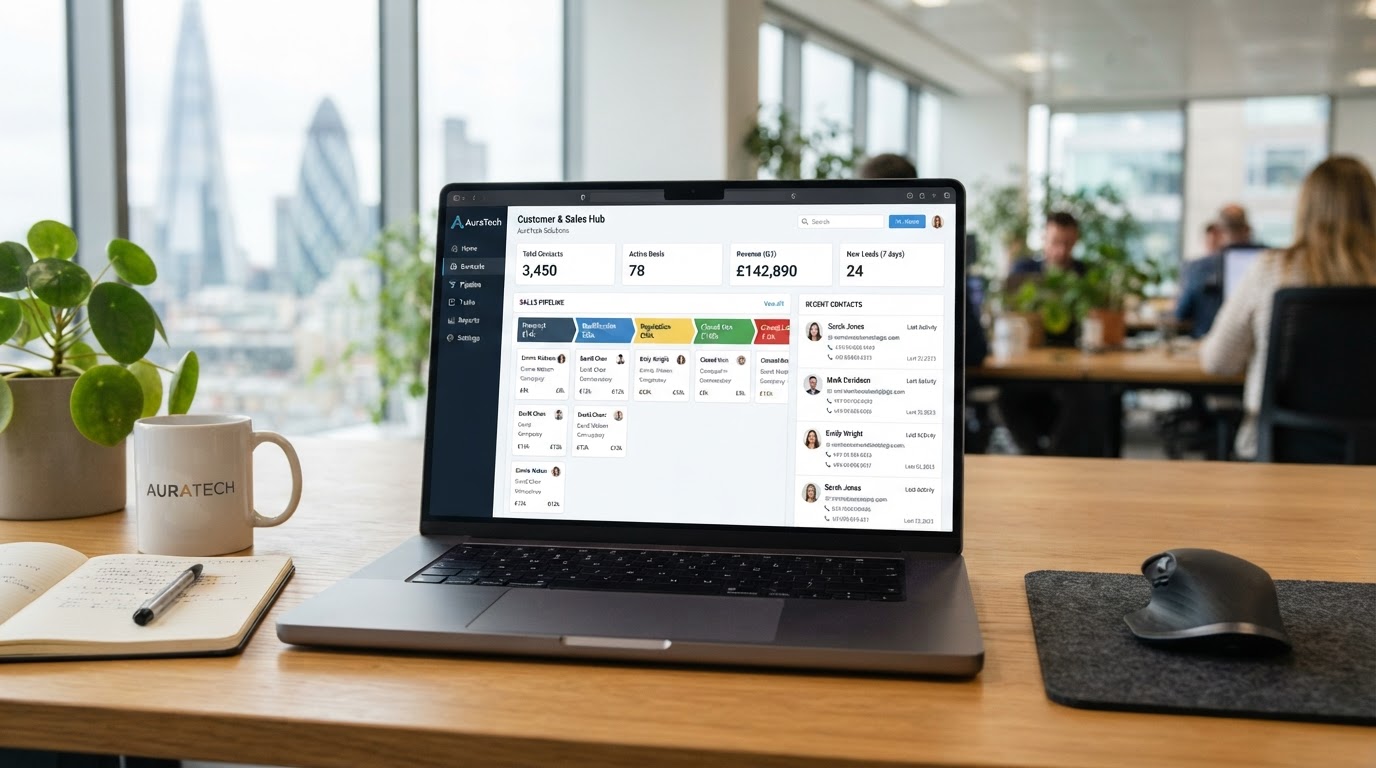
- The entire conversation is saved securely in your CRM system, waiting for you or your team to continue the chat when you are ready.
This simple mechanism transforms a frustrating dead end into the start of a productive conversation. It tells the customer, "We see you, we value your call, and we want to help," which is often all it takes to stop them from looking elsewhere.
When is it most useful?
This type of automation is incredibly useful for businesses where the team is rarely sitting at a desk waiting for the phone to ring. If your work takes you away from a screen or demands your full physical attention, missed call text back is designed for you.
Realistic examples of businesses that benefit hugely from this include:
- Tradespeople working on-site: When you are up a ladder, underneath a boiler, or operating heavy machinery, you simply can't safely answer your phone. A text back lets the customer know you are busy working but will get back to them.
- Cleaning companies: Managing active jobs requires focus. Stopping to answer a call can disrupt the flow of work, but ignoring it entirely loses a potential new client.
- Garages and mechanics: When you are covered in grease and working under a car, reaching into your pocket for a ringing phone is impractical.
- Salons and appointment businesses: If you are cutting hair, giving a massage, or consulting with a client, answering the phone is unprofessional and ruins the customer experience for the person currently paying you.
- Professional services: Accountants, solicitors, and consultants who spend large portions of their day in meetings or deep-focus work cannot always answer immediately.
- Calls received outside normal opening hours: Customers often search and call in the evenings or on weekends. After-hours text responses ensure these leads are captured rather than lost to the void.
What should the message say?
Crafting the perfect automatic text after a missed call is crucial. Your message needs to strike the right balance between being helpful, honest, and conversational. It should not sound like a corporate robot, nor should it pretend to be a human typing in real-time.
When deciding what to say after missing a customer call, ensure your message includes the following elements:
- Identify the business: Always let them know they reached the right place. A simple "Hi from [Business Name]" reassures them.
- Acknowledge the call: Confirm that you saw they tried to get in touch. This validates their effort.
- Avoid pretending a person typed it manually: People are smart. They know it's automated if it arrives the very second they hang up. Be transparent about it.
- Invite a simple reply: The goal is to start a conversation. Ask them how you can help or what they need a quote for.
- Set an honest expectation: Tell them when you will realistically reply. Don't promise an immediate callback if you are on a job for the next three hours.
- Stay short and natural: Keep it concise and friendly. Nobody wants to read a novel via text message.
Include five practical templates
To help you get started, here are five practical, editable missed-call text message examples you can adapt and use for your own business operations:
1. General local business
"Hi, this is [Business Name]. We missed your call as we're currently helping another customer. How can we help you today? Reply to this text with your enquiry and we'll get back to you shortly."
2. Trades and home services
"Hi, you've reached [Business Name]. We're currently on-site and can't safely answer the phone right now. Please text us a few details of what you need doing, and we'll reply as soon as we're free."
3. Appointment-based business
"Hello from [Business Name]! We're with a client right now and couldn't grab the phone. If you'd like to book an appointment or have a quick question, just reply to this text and we'll sort it out for you as soon as we're done."
4. After-hours enquiries
"Hi, it's [Business Name]. We're currently closed for the day, but we've got your missed call. Please reply with your enquiry, and we'll make sure to get back to you first thing tomorrow morning."
5. A business offering online booking
"Hi, this is [Business Name]. We missed your call! If you're looking to book a slot, you can see our live availability and book directly here: [Link]. Otherwise, reply to this text and we'll help you out when we're free."
How the complete workflow works
The true power of this system lies in the complete workflow. It is not just about sending a single text message; it is about capturing the lead, organising the communication, and ensuring nothing slips through the cracks.
Use this clear sequence to understand how the automation functions in the background:
Missed call → automatic acknowledgement → caller replies → enquiry enters the CRM → team receives a notification → human follows up → outcome is tracked.
When the caller replies to your automated text, their message doesn't just disappear into a random phone. It drops directly into your CRM system's unified inbox. This means anyone on your team can see the conversation, understand the context, and take over when they are available.
It is important to remember that the automation supports follow-up but does not replace genuine customer service. It simply keeps the conversation alive and the customer engaged until a human can step in and provide a personal touch.
Common mistakes
Common mistakes to avoid
While missed-call automation is an incredibly powerful tool, it can be misused if set up poorly. To ensure you provide a great customer experience and don't accidentally alienate potential clients, avoid these common mistakes:
- Sending a long or robotic message: Keep it sounding natural. Overly formal or complex messages feel alienating via SMS. If your message reads like a legal terms and conditions document, the customer will likely ignore it. Speak in the same tone you would use if you were texting a friend.
- Failing to identify the business: If a customer calls three different plumbers in a panic about a leak, and gets a generic "I missed your call" text from an unknown number, they won't know who they are talking to. Always include your business name in the first sentence.
- Making unrealistic response-time promises: Don't say "I'll call you back in 5 minutes" if you are halfway through a 4-hour job. Honesty builds trust. It is much better to say "I will reply as soon as I am free" than to set an expectation you cannot meet.
- Sending repeated messages: If somebody does not reply to your initial automated text, do not bombard them with follow-ups. One polite acknowledgement is enough. Sending multiple texts to an unresponsive number moves you from helpful to annoying very quickly.
- Treating the response as permission for unrelated marketing: Just because they texted you about a quote does not mean they opted in to receive your weekly promotional newsletter. Respect their privacy and stick to the subject they enquired about.
- Installing the automation but failing to monitor replies: The system only works if you actually check your CRM and reply to the people who text you back. Automation starts the conversation, but a human must finish it. Ensure your team knows how to access the shared inbox and respond promptly.
- Using exactly the same daytime and after-hours wording: Sending a text saying "we're busy with another customer" at 11 PM on a Sunday looks silly and unprofessional. Use appropriate after-hours text responses that clearly state your opening hours and when they can expect a reply.
How to measure whether it is working
To truly understand the value this automation brings to your business, you need to track its performance. We recommend tracking these simple but revealing metrics to measure success over time:
- Number of missed calls: This gives you a baseline of how many opportunities were potentially slipping away before you implemented the system.
- Texts successfully sent: Confirms the automation is triggering correctly and reaching the caller's network.
- Callers who reply: This is your engagement rate. How many people actually texted back instead of hanging up and calling a competitor? This is the most crucial metric for measuring the immediate impact of the text.
- Enquiries followed up: Are you and your team successfully continuing the conversations once the caller replies? This tracks your internal team's responsiveness.
- Appointments or jobs booked: The ultimate metric. How many jobs did you win from initial missed calls that would have otherwise been lost? Tracking this allows you to calculate the exact return on investment for the system.
By keeping an eye on these numbers, you can quickly see the direct return on investment that a simple text-back system provides, often paying for itself after saving just one or two jobs a month.
Missed call text back versus an AI receptionist
As technology advances, many businesses wonder about the difference between a simple text-back system and more advanced call-handling solutions. Specifically, how does text back compare to an AI receptionist for Aberdeen businesses?
The distinction is straightforward. Text back responds after a call is missed, sending a simple message to start a text-based conversation. It is reactive, catching the lead after the phone stops ringing. It is perfect for businesses that prefer texting or have straightforward booking processes.
An AI receptionist, on the other hand, answers during the call. It actually speaks to the customer, can answer frequently asked questions, take detailed messages, and even route calls to different departments. It provides a voice-led experience, which some demographics prefer over texting.
Some businesses only need text back—it is simple, highly effective, and requires very little setup. However, businesses with high call volumes, complex enquiries, or those who want to provide a voice-led experience even when they are busy may benefit from using both systems in tandem to ensure absolutely no lead is ever left behind.
Conclusion and CTA
Missing a call shouldn't mean missing a customer. In today's fast-paced environment, consumers expect rapid responses. By implementing a reliable system, you can capture leads, provide excellent initial customer service, and focus on the job at hand without the constant anxiety of a ringing phone.
Don't let your hard-earned leads slip away to the competition just because you were busy doing your job. An automated missed call text back system is a straightforward, high-impact addition to any local business toolkit. It is easy to set up, runs quietly in the background, and acts as a safety net for your marketing efforts.
Ready to stop losing leads and start turning missed calls into conversations? Book a free setup call today and we'll show you exactly how this automation can work for your specific business.